
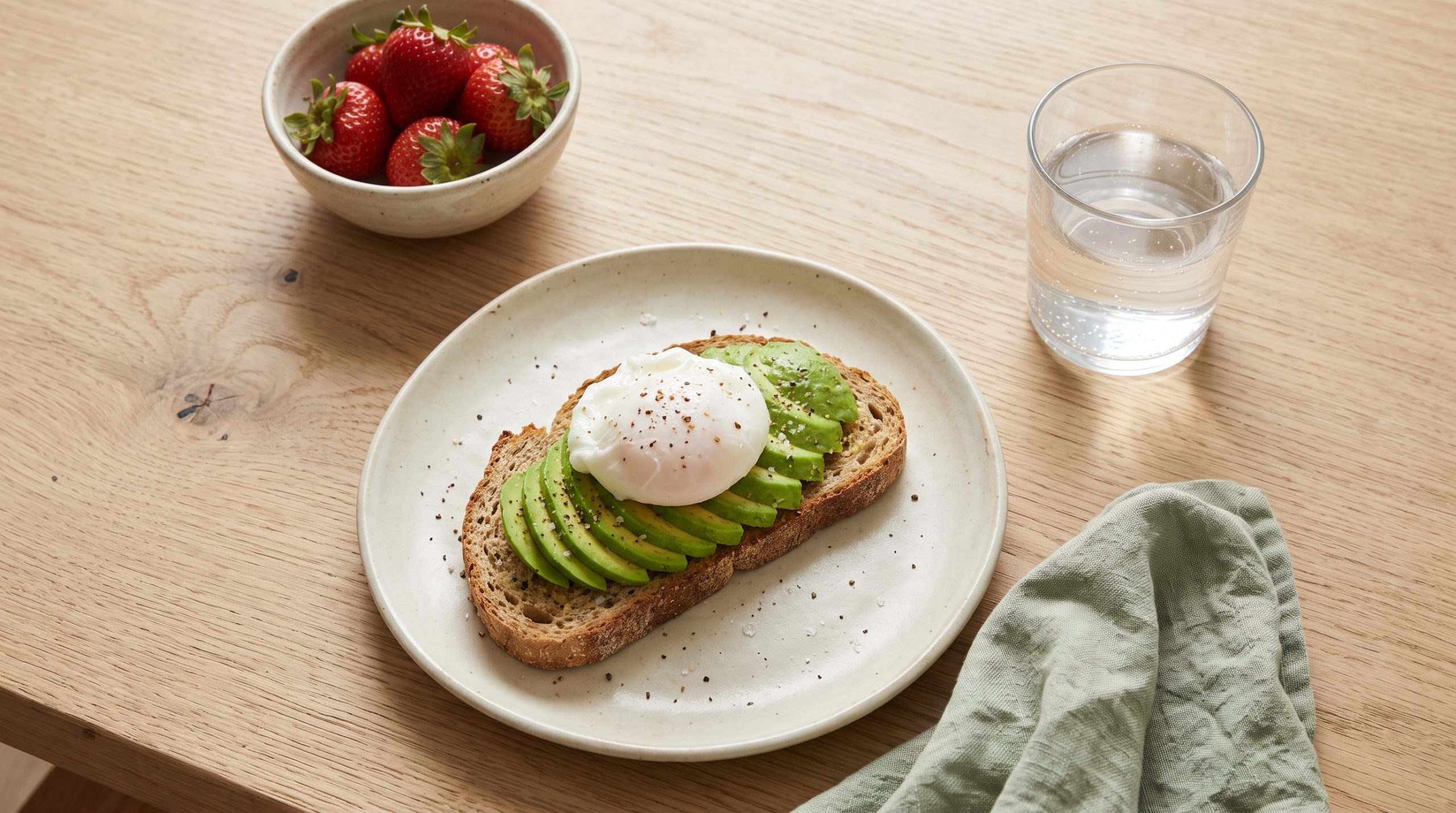
A high-protein meal plan does not have to mean shakes, bars and a fridge packed with chicken. For many of the women I work with, it simply means making sure every meal and snack does a bit of the protein work, using foods they already buy and enjoy.
Here is how one of my recent client plans came together, and why it was built the way it was.
Not everyone has a sweet tooth
In my last post on custom meal plans, I wrote about a client who wanted something sweet after every meal, so I planned that in. This client was the opposite.
Her food diary showed a clear savoury preference. She enjoyed eggs, tuna, jacket potatoes and proper dinners, and she was not reaching for biscuits or chocolate. Forcing sweet treats into her plan would have been pointless. Instead, I built her high-protein meal plan around the foods she was already happy to eat, and simply tightened up the portions and balance.
What a high-protein meal plan looks like in practice
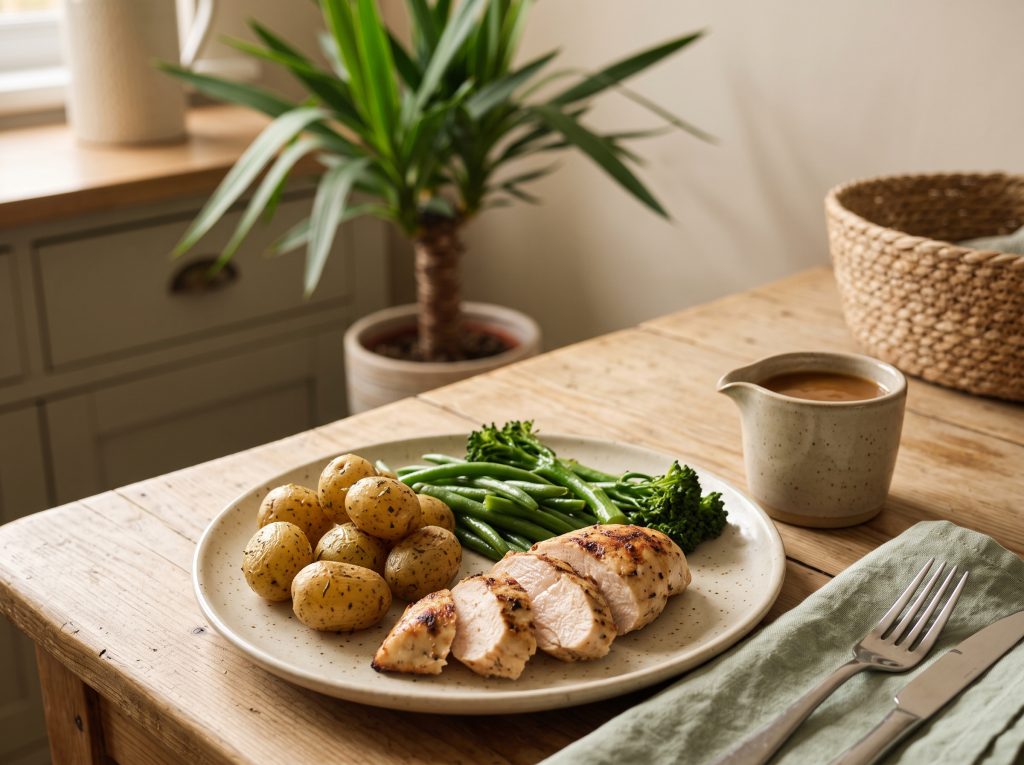
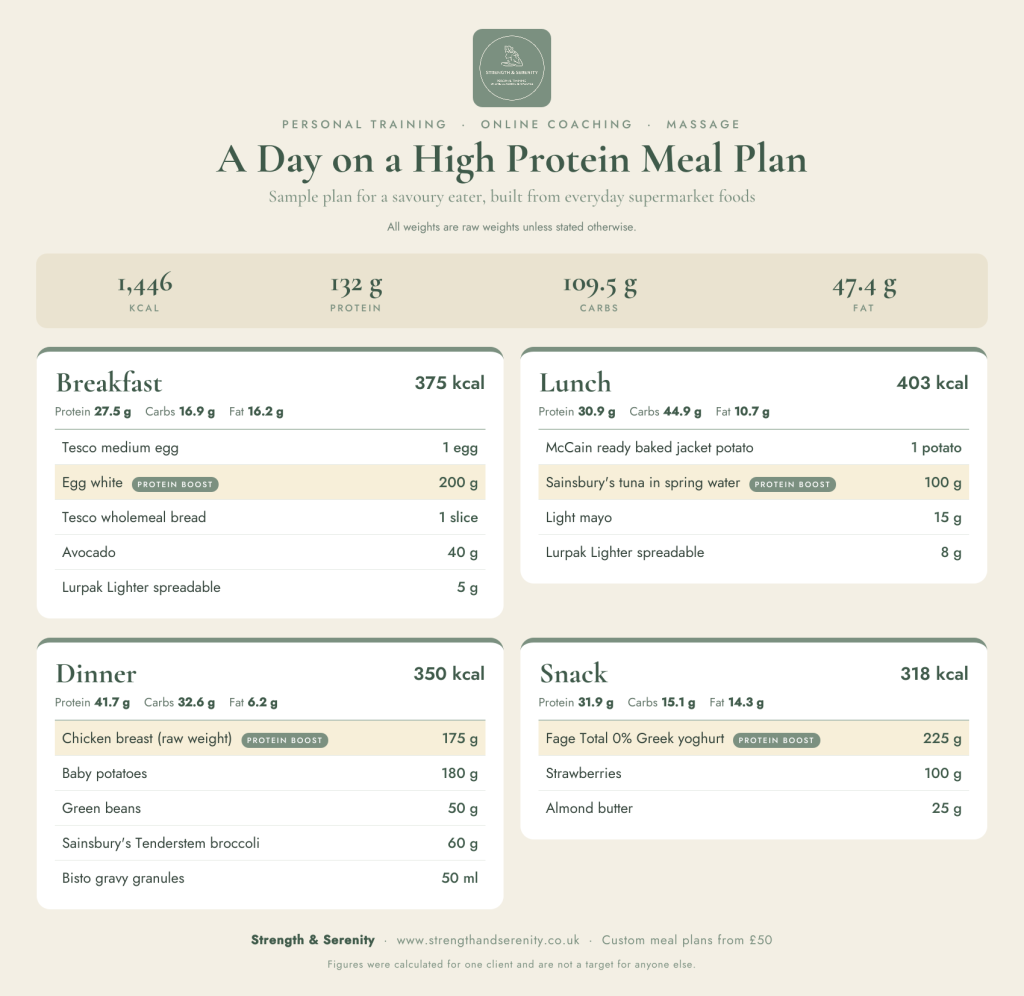
Her day follows a simple pattern, with a good source of protein at every eating occasion:
- Breakfast: a whole egg and egg whites on wholemeal toast with a little avocado.
- Lunch: a ready-baked jacket potato with tuna and light mayo.
- Dinner: chicken breast with baby potatoes, green beans and tenderstem broccoli, finished with gravy.
- Snack: Greek yoghurt with strawberries and a spoonful of almond butter.
Each meal delivers roughly 28 to 42 grams of protein, and even the snack contributes a meaningful amount. Across the day the plan reaches 132 grams of protein, which suits her size, activity and goals. Those numbers are specific to her, so please do not treat them as a target for yourself.
Why spread protein across the day?
Many people eat very little protein at breakfast and a large portion at dinner. Spreading it more evenly means you are never far from a protein-rich meal, and many people find those foods keep them feeling fuller for longer. That can make it easier to stay consistent between meals without constant snacking.
Protein foods such as eggs, fish, meat, dairy and pulses also sit within the NHS guidance on a balanced diet. The NHS Eatwell Guide is a helpful overview if you would like to see how protein fits alongside everything else on your plate.
Everyday supermarket foods, no fuss
Nothing in this plan is exotic or expensive. It uses ready-baked jacket potatoes, tinned tuna, bagged green beans and gravy granules, all from the usual supermarket aisles. That is deliberate. A plan you can shop for on a busy Tuesday is a plan you will actually follow.
Every quantity is listed in grams, using raw weights unless stated otherwise. It takes a few days to get used to weighing food, but it removes the guesswork and keeps the numbers accurate.
A high protein meal plan built around you
The reason this plan works for her is not the protein target on its own. It is that the foods, portions and timings match how she actually eats. A generic high protein plan would have given her shakes she did not like and meals she would not cook.
Custom plans from Strength & Serenity start from £50, and they are written after I have reviewed your food diary. If you want to see how a plan would look for your own habits, preferences and goals, I would love to help.
Is a high protein meal plan right for you?
A higher protein approach can suit you if you:
- Prefer savoury foods and simple, familiar meals
- Struggle with hunger between meals
- Want structure without complicated recipes
- Train regularly and want your nutrition to support it
Please speak to your GP before increasing your protein intake if you have a kidney condition or any other medical condition, or if you are pregnant. A meal plan is not medical advice.
Ready to get started?
Get in touch with Strength & Serenity to talk through the food diary and find out how a high-protein meal plan could work for you.