
Healthy fats and hormones go hand in hand, yet fat is still one of the most misunderstood parts of a woman’s diet. For years, low-fat became shorthand for healthy, and fat itself got labelled as something to avoid. The truth is very different. Healthy fats are an essential part of a balanced diet and play several important roles in the body, particularly when it comes to hormone health.
Why Healthy Fats and Hormones Are So Closely Linked
Dietary fats provide essential fatty acids and the building blocks the body needs for normal hormone production. Without enough of the right fats in your diet, your body simply doesn’t have the raw materials it needs to keep hormone production running as it should.
Fats also help us absorb the fat-soluble vitamins A, D, E and K, which support areas including bone health, immunity and normal body function. If your diet is consistently too low in fat, it can quietly affect how well your body absorbs and uses these vitamins, even if you’re eating plenty of them.
Omega-3 fats in particular are important for brain and heart health, while eating enough fat as part of an overall balanced diet can also support menstrual and reproductive health. This is a big part of why healthy fats and hormones deserve more attention than they typically get.
Good Sources of Healthy Fats
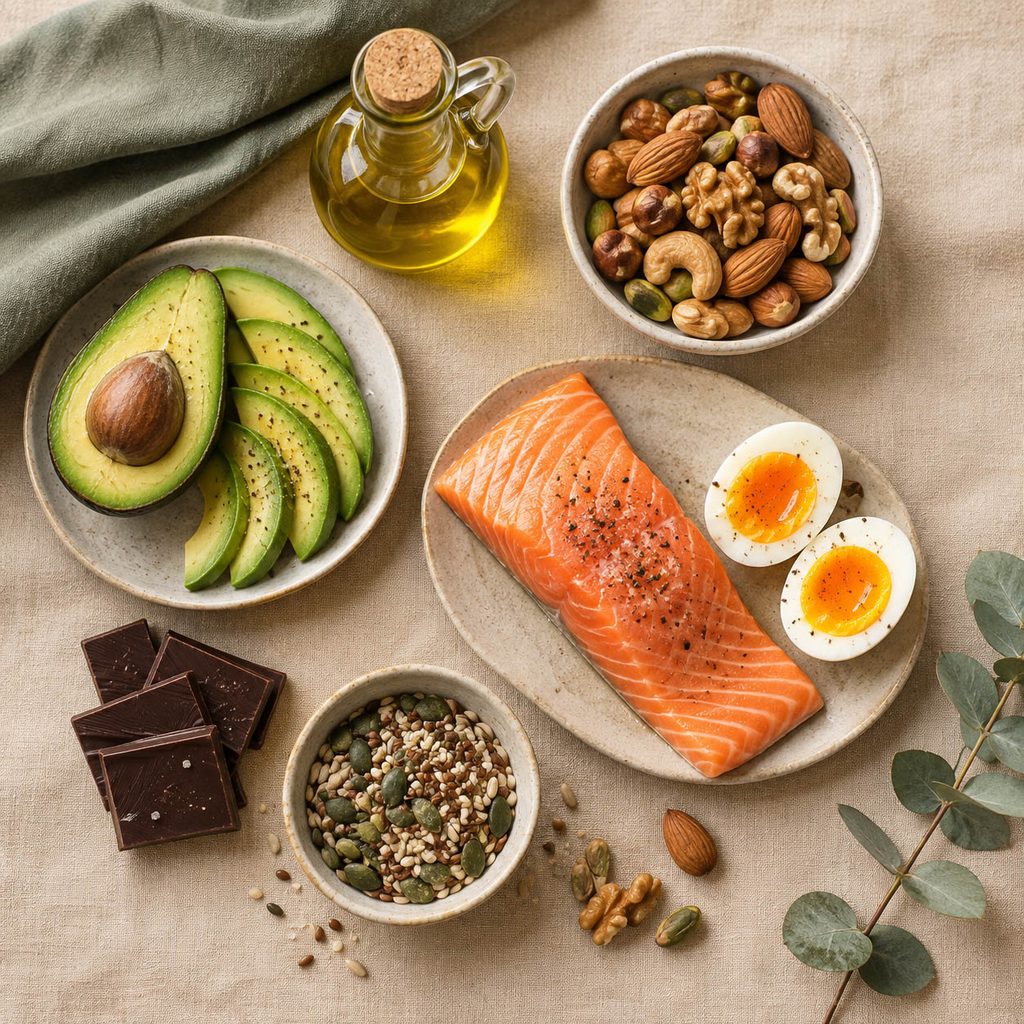
If you’re looking to bring more healthy fats into your meals, focus on foods like:
- Avocado
- Olive oil
- Salmon and other oily fish
- Dark chocolate
- Nuts and nut butters
- Seeds
- Eggs
These foods are versatile, easy to build meals around, and a great way to naturally increase your intake of unsaturated fats without overhauling your entire diet.
More Isn’t Always Better
However, more isn’t always better. Fats are calorie-dense, so the goal is to include sensible portions and focus mainly on unsaturated fats, not to follow an excessively high-fat diet. Balance is the key word here. A plate built around protein, plenty of vegetables, and a sensible portion of healthy fat will do far more for your hormones and your energy than either extreme.
Hormones Are Never About Just One Thing
It’s worth remembering that healthy hormones aren’t controlled by one food or nutrient alone. Overall nutrition, energy intake, sleep, stress, exercise and individual health conditions all matter too. Fat is an important piece of the puzzle, but it works alongside everything else going on in your life and your body.
If you’ve been avoiding fat out of habit or fear, this is your reminder that it belongs on your plate. According to the NHS guidance on fat in your diet, unsaturated fats found in foods like oily fish, nuts, seeds and avocado are an important part of a healthy, balanced diet.
The Bottom Line
Healthy fats and hormones rely on each other more than most people realise. Cutting fat too low isn’t doing your hormones, your energy, or your long-term health any favours. Instead, focus on including a variety of unsaturated fats in sensible portions, alongside the rest of a balanced, nourishing diet.
Save this post as a reminder that dietary fat is not the enemy.
If you’d like support building a nutrition plan that actually works with your hormones rather than against them, that’s exactly what one-to-one coaching at Strength & Serenity is designed for.
Ready to build a plan that supports your whole body? Get in touch to find out more about one-to-one coaching.